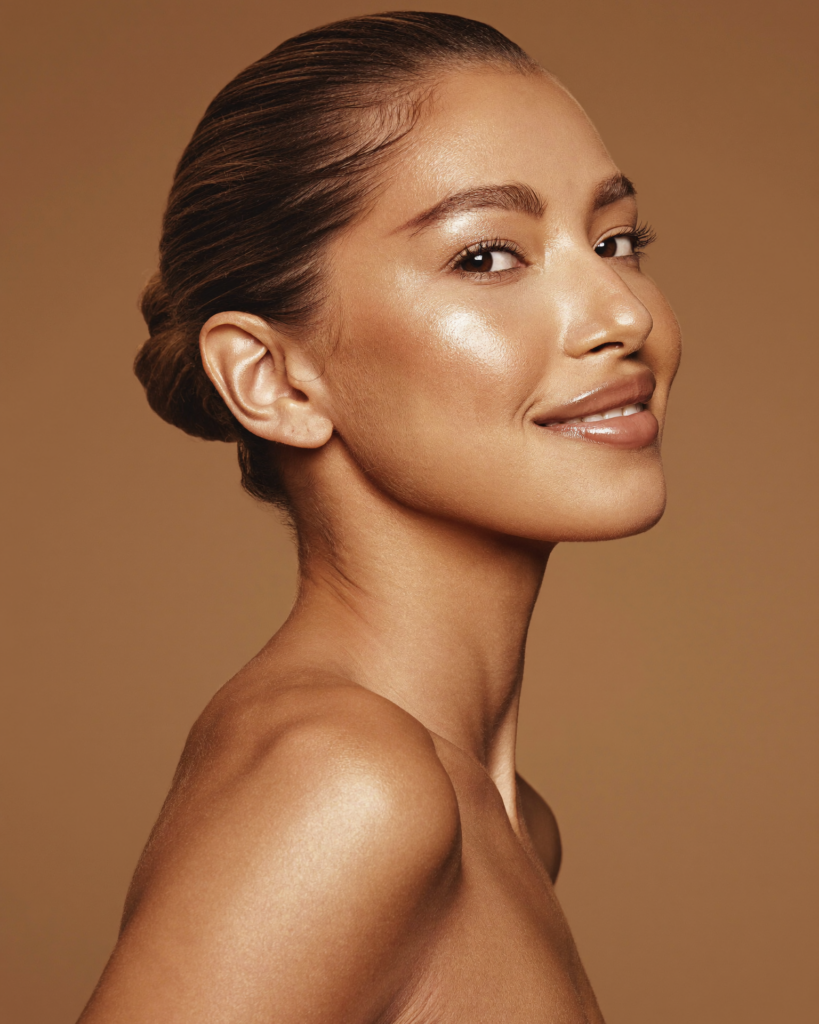
On the Rhinoplasty.
Rhinoplasty is the most technically demanding aesthetic operation in plastic surgery. That is not a marketing line — it is the consensus of the specialty. The nose is a three-dimensional construct of bone, cartilage, lining, and skin, each layer healing on a different timeline, each millimeter visible from every angle. The operation is unforgiving in a way that few others are.
What follows from that fact is practical: the surgeon’s experience matters more here than it does in most other procedures. Volume of cases performed, comfort with both the open and closed approaches, willingness to perform structural grafting when needed — these are not credentials to scan past. They are the difference between a refined result and a result that needs to be redone.
The other practical consequence is patience. The final shape of the tip is not visible for approximately 12 months. The bridge settles faster, but the tip — the part most patients are most focused on — takes a year. We will tell you this at consultation and we will tell you again at every follow-up. It is the most surprising fact about the operation.
The Colores approach is preservation: refine the nose you have rather than impose a default shape on every face. Ethnic features, identity, the proportions that make your face yours — these are starting points, not problems to solve. A good rhinoplasty looks like a better version of your nose, not a different nose.
The procedure
Rhinoplasty is performed under general anesthesia and typically takes 2–3 hours depending on the complexity of the plan and whether a functional component is included. Surgery takes place in our AAAASF-accredited facility. Most patients are discharged the same day; no overnight stay is typical for a standard cosmetic case.
Open vs closed approach. The open approach uses a small incision across the columella — the strip of skin between the nostrils — to lift the entire soft tissue envelope. This gives direct, unobstructed visualization of the underlying cartilage and bone. It is the preferred approach for significant tip refinement, complex grafting, asymmetry correction, and revision cases. The trade-off is a small external scar, generally well-concealed but theoretically visible at close range. The closed approach places all incisions inside the nostrils — no external scar. The trade-off is restricted access and limited visualization, which is acceptable for modest dorsal work but constraining for complex tip surgery. The plan determines the approach, not the other way around.
Dorsum and tip. The bony and cartilaginous dorsum (the bridge) is addressed first — reducing a hump, augmenting a depression, performing osteotomies to narrow the bony base if planned. Tip refinement comes second and is the most technically demanding portion of the operation. Cartilage is reshaped, sutured, and often supported with grafts taken from the septum to control projection, rotation, and definition. Tip work is what most patients ask for and what takes the longest to settle.
Functional component. When breathing obstruction is documented, septoplasty (straightening a deviated septum) or turbinate reduction can be performed in the same operation. These are functional procedures, not cosmetic ones, and they are itemized separately on the written quote — both clinically and for insurance billing purposes.
An external splint is placed at the end of the case to protect the new framework. Internal splints may be used if septal work was performed. Discharge is with written aftercare instructions and a follow-up scheduled for splint removal at 5–7 days.

Candidates
Good candidates for rhinoplasty typically meet the following criteria:
- Physical maturity. General guideline: age 16+ for women, 17+ for men, when nasal growth has typically concluded. This is a guideline, not a hard rule — the underlying requirement is that the nasal skeleton has finished growing. Younger patients are evaluated individually.
- A specific anatomic concern. Most patients come in for one of: a dorsal hump, a wide or bulbous tip, an over-projected or under-projected tip, a deviated nose, asymmetry, or a combination of breathing obstruction and cosmetic concern. “I want a different nose” without a specific concern is harder to plan around than a specific anatomic goal.
- Realistic expectations about asymmetry. No face is perfectly symmetrical, and no rhinoplasty result will be perfectly symmetrical. Small post-operative asymmetries are normal and often invisible to anyone but the patient. Expecting perfect symmetry is a setup for disappointment.
- Realistic expectations about the timeline. If you cannot tolerate not seeing the final result for 12 months, this is not the right operation at this moment.
- Non-smoker, or fully stopped for at least 4 weeks before surgery and 4 weeks after. Nicotine impairs the healing of the nasal skin and lining and increases the risk of poor scarring.
- No active acne over the nose. Active acne on the surgical site significantly raises infection risk. Skin must be clear at the time of surgery.
- No uncontrolled medical conditions, no active sinus infection, no bleeding disorders without prior clearance.
- Capable of avoiding contact sports and direct nasal trauma for 6 weeks post-operatively.
Candidacy is assessed in full at your consultation. Your specific anatomy, skin type, ethnic considerations, and goals determine whether and how the operation is offered.
Recovery, week by week
Rhinoplasty recovery has two timelines: the social timeline (when you can return to public life) and the structural timeline (when the result is final). They are not the same.
| Milestone | What is typically allowed | What to avoid |
|---|---|---|
| Day 1 (discharge) | Discharge home the same day. External splint in place; internal splints if used. Head elevated; cold compresses on the cheeks (never directly on the nose). Clear liquids progressing to light food. Rest. | Blowing the nose. Bending forward. Lifting. Showering with the splint wet. Removing or repositioning the splint. Aspirin, ibuprofen, or any blood thinner unless cleared. |
| Week 1 | Splint removal at the day 5–7 follow-up appointment. Internal splints removed if placed. Bruising under the eyes peaks during this week. Light walking. Head remains elevated for sleep. | Bending, lifting, straining. Glasses resting on the nasal bridge. Direct sun exposure to the bruised areas. Driving while on narcotic pain medication. |
| Week 2 | Visible bruising largely resolved for most patients; residual yellow tinge may persist and is concealable with makeup. Most patients return to desk work at 7–10 days. Sleep position still elevated. | Strenuous exercise. Direct trauma to the nose. Heavy glasses on the bridge — use tape supports or contact lenses if possible. |
| Weeks 2–4 | Return to most social activity. Light exercise (walking, stationary cycling) gradually resumed. The shape is recognizable but not final — significant tip swelling remains. | Contact sports, weight lifting, anything that risks nasal impact. Submerging the nose underwater. |
| Week 6 | Most exercise resumed with surgical clearance. The nose continues to refine. Photos at this stage do not represent the final result. | Contact sports, boxing, martial arts, anything with risk of direct nasal blow. Confirm clearance with your surgeon before resuming. |
| Month 3 | Most swelling resolved in the bridge and middle vault. The upper two-thirds of the nose looks essentially final. Tip remains slightly swollen, particularly in patients with thicker skin. | No lasting activity restrictions for most patients at this point. Sun protection of the nasal skin continues to matter. |
| Month 12 | Final tip result visible. Full resolution of swelling. Photos at the one-year follow-up appointment represent the final outcome and are the basis for any revision discussion if one is being considered. | No lasting restrictions. Long-term sun protection of the nasal skin protects scar quality and skin tone. |
The timeline above is a general reference. Your written post-operative instructions, provided at discharge, are the authoritative guide. The 12-month mark is not arbitrary — tip refinement genuinely takes that long, and assessments before then are interim, not final.
Risks & what we do to reduce them
All surgery carries risk. Rhinoplasty has its own profile, and an honest discussion of revision rates and aesthetic uncertainty is part of informed consent — not an afterthought.
General anesthesia risks: adverse anesthetic reaction, infection, wound healing complications, and the standard set of risks that apply to any general anesthesia procedure. The case duration is moderate for a cosmetic operation, which keeps cumulative anesthesia risk lower than in longer combined cases.
Persistent swelling at the tip. The most common cause of “something looks off” at the 3- and 6-month mark is residual tip swelling, particularly in patients with thicker skin. This is not a complication — it is the normal healing timeline for the tip and resolves through 12 months. Patience is the treatment.
Asymmetry. Small post-operative asymmetries are common and often invisible to anyone but the patient. The nose was not perfectly symmetrical before surgery, and it will not be afterward. Visible asymmetry that warrants correction is a different category and is discussed in the revision conversation, typically after 12 months.
Need for revision. Revision rates in rhinoplasty are higher than for most aesthetic procedures. This is published specialty data, not a Colores statistic, and it reflects the technical demand of the operation rather than any single surgeon’s results. Choosing a surgeon who performs rhinoplasty frequently, plans conservatively, and uses structural grafting where indicated reduces but does not eliminate the possibility of revision.
Breathing changes. Properly planned cosmetic rhinoplasty should preserve or improve breathing. Aggressive resection without structural support is the historical cause of post-rhinoplasty breathing problems, and the modern standard avoids it. If breathing obstruction develops or persists, evaluation and corrective surgery are options.
Persistent numbness of the tip skin. Sensation in the skin over the tip is commonly reduced for several months and returns gradually. A small minority of patients experience long-term reduction in tip sensation. It is rarely functionally significant but worth knowing in advance.
Columellar scar (open approach only). When the open approach is used, a small incision across the columella results in a fine scar. In most patients this scar fades to near-invisibility within the first year. In a minority — particularly with certain skin types — the scar remains faintly visible at close range. This is a structural trade-off of the open approach and is discussed before the approach is chosen.
Risks are discussed in full at your consultation. No minimizing, no alarmism.
References & related reading
Want to dig deeper? For independent, non-commercial medical information on cosmetic and plastic surgery, see MedlinePlus, published by the U.S. National Library of Medicine, and the patient education resources of the American Society of Plastic Surgeons.
At Colores you may also want to read about Tummy Tuck (Abdominoplasty) and 360° Liposuction, meet our board-certified surgeons, or request an itemized written quote.
What rhinoplasty costs at Colores.
Primary cosmetic rhinoplasty without a functional component falls toward the lower end of the range. Combined cosmetic and functional cases, revision cases, and plans requiring extensive structural grafting trend toward the higher end. The approach selected (open vs closed) does not by itself determine the price — the complexity of the plan does.
What is included
- Surgeon fee (cosmetic component)
- AAAASF-accredited facility fee
- Anesthesiology (general anesthesia)
- External splint, internal splints if used, and dressing supplies
- Post-operative follow-up appointments (day 5–7 splint removal, week 6, month 3, month 12)
Financing available through CareCredit and other third-party medical financing partners. Approval and terms depend on your credit profile. Ask your patient coordinator at your consultation.
All prices are starting estimates. Your written itemized quote, provided after consultation, is the authoritative figure.
Request itemized quoteRhinoplasty questions, answered directly.
The range is $8,800–13,200, depending on the complexity of the surgical plan and whether a functional component is included. Primary cosmetic rhinoplasty without functional work falls toward the lower end. Combined cosmetic and functional cases, or complex tip refinement requiring cartilage grafts, trend toward the higher end.
Every quote is itemized in writing after consultation, covering surgeon fee, facility fee, anesthesiology, splints and dressings, and follow-up appointments. If a functional septoplasty is part of your plan for documented breathing obstruction, that portion is itemized separately so insurance can be billed where applicable.
Neither approach is universally better. The open approach uses a small incision across the columella (the strip of skin between the nostrils) to lift the soft tissue and give direct visualization of the underlying cartilage and bone. This allows the most precise tip refinement and is the preferred approach when significant tip work, complex grafting, or revision is planned. The trade-off is a small external scar — usually well-hidden but theoretically visible.
The closed approach uses incisions entirely inside the nostrils, leaves no external scar, and works well for limited dorsal reduction or modest changes. The trade-off is less direct visualization and limited access for complex tip work. Your surgeon will recommend the approach that matches the surgical plan, not a default preference.
Approximately 12 months for the tip; 3–6 months for the upper two-thirds of the nose. This is the single most surprising fact for rhinoplasty patients. The splint comes off at 5–7 days and the visible bruising mostly clears by week 2, but the tissue swelling — particularly in the thicker skin of the tip — resolves slowly.
At 3 months you will see most of the result. At 6 months the bridge and middle vault have settled. The final refinement of the tip is not visible until around 12 months and can continue to subtly evolve beyond that. Patience is part of the operation.
Not if the surgical plan is matched to your face. The current standard in aesthetic rhinoplasty — including preservation rhinoplasty and ethnic rhinoplasty approaches — is to refine the nose you have rather than impose a default shape on every face. A nose that fits your features, supports your ethnic identity, and looks natural in profile and three-quarters is the goal.
Over-resection, over-rotation of the tip, and aggressive narrowing produce the recognizably surgical look. Conservative, structurally sound work does not. We will discuss the specific changes planned for your face at consultation and show you what is achievable for your anatomy.
Properly planned cosmetic rhinoplasty should preserve or improve breathing — not impair it. The internal nasal valve, septum, and turbinates all contribute to airflow, and a surgeon mindful of structural support will use cartilage grafts (spreader grafts, alar batten grafts, columellar struts) to maintain the breathing function as the external shape is refined.
If you have pre-existing breathing obstruction — a deviated septum, enlarged turbinates, internal valve collapse — those can be addressed simultaneously with septoplasty or turbinate reduction. Aggressive resection without structural reinforcement is the historical cause of post-rhinoplasty breathing problems. That approach is no longer the standard.
The cosmetic component is not insurance-covered. If your plan includes a functional septoplasty for documented breathing obstruction, or turbinate reduction for nasal congestion that has failed medical management, those functional portions may be covered by your insurance — subject to your specific plan, prior authorization, and documentation requirements.
We separate the cosmetic and functional components on your written quote so the billing is transparent. We do not bill cosmetic work as functional under any circumstances. If functional symptoms exist, an ENT or facial plastic evaluation with appropriate documentation is the starting point for an insurance claim.
Honestly: revision rates in rhinoplasty are higher than for most aesthetic procedures. This is published specialty data, not a Colores statistic. The reasons are structural — the nose heals as a layered, three-dimensional construct, and small variations in scar contracture, cartilage memory, and tissue thickness can produce small visible changes that the patient or surgeon may want to address.
A revision is most commonly considered after the 12-month mark, when the final result is visible. Choosing a surgeon who performs rhinoplasty frequently, accepts the technical demand honestly, and plans conservatively reduces but does not eliminate the chance of revision. We will discuss the realistic possibility at consultation.