On the BBL.
The Brazilian Butt Lift is one of the most frequently misunderstood procedures in cosmetic surgery, starting with its name. There is no lifting involved. There is no implant. What there is: a careful two-part operation — liposuction to harvest fat from areas where you have excess, and a precise injection technique to transfer that fat into the gluteal area where you want more volume. Your body does the rest.
The procedure became popular in part because the results look and feel different from implants. Transferred fat integrates with surrounding tissue. It moves naturally, because it is natural tissue. For patients who have the anatomy to support it — meaning enough donor fat at a stable weight — it can produce a result that implants cannot replicate.
Who it is for: patients who are at or near their target weight, have adequate donor sites (typically abdomen, flanks, inner thighs, or back), and want shape correction rather than dramatic augmentation. It works in both directions: the liposuction component reshapes the donor areas at the same time it provides the material for augmentation. Many patients are as interested in the waist reduction as in the gluteal volume.
At Colores, the approach is conservative. We discuss what the anatomy supports, not what trends suggest. Every patient leaves the consultation with a written quote and a clear picture of what is realistic for their specific body. If the anatomy does not support the procedure, we say so — and we discuss what does apply.
The procedure
A BBL takes 2–3 hours under general anesthesia in our AAAASF-accredited facility. It proceeds in three stages.
Stage one — liposuction. Tumescent fluid (saline, epinephrine, lidocaine) is infused into the donor areas to minimize bleeding and trauma. A small-bore cannula removes fat from the pre-marked sites — abdomen and flanks most commonly, plus inner thighs or back depending on your anatomy. The volume harvested is larger than the volume ultimately injected, because purification reduces the yield.
Stage two — purification. The harvested fat is processed by centrifuge to separate viable fat cells from oil, blood, and fluid. Only the purified, concentrated fat proceeds to injection.
Stage three — injection. Purified fat is injected in small, even passes into the subcutaneous layer of the buttocks — above the gluteal muscle, not into it. This distinction matters for safety: intramuscular injection places fat adjacent to large blood vessels, which increases the risk of fat embolism. We follow the subcutaneous-only protocol recommended by the Aesthetic Society Multi-Society Task Force on BBL Safety.
You are discharged the same day with a compression garment in place and written aftercare instructions.
Candidates
Good candidates for a BBL typically meet all of the following criteria:
- Weight stable for at least 6 months — not actively losing or gaining.
- Sufficient donor fat at one or more harvest sites (abdomen, flanks, back, inner thighs). If BMI is below approximately 21–22, there may not be enough harvestable fat to achieve meaningful augmentation.
- Non-smoker, or fully stopped for at least 4 weeks before surgery and 4 weeks after. Nicotine impairs the blood supply that newly transferred fat depends on to survive.
- No uncontrolled clotting disorders or blood-thinning conditions that cannot be safely managed perioperatively.
- No active infection or open wounds in the surgical area.
- Realistic expectations: transferred fat volume that survives long-term is typically 60–80% of what is injected. The final result takes 3–6 months to fully settle.
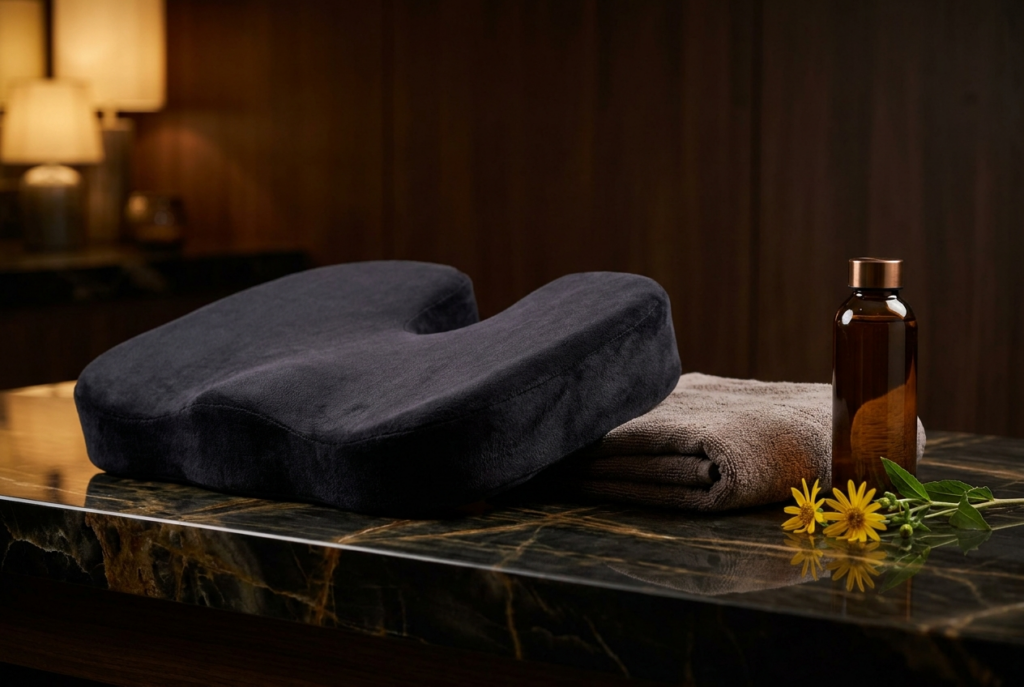
- Able to comply with post-operative positioning requirements: no direct sitting on the buttocks for 2 weeks, and consistent use of a BBL pillow for 6 weeks.
- Not pregnant and not planning pregnancy in the near term, as significant weight changes affect the result.
Contraindications are reviewed in detail at your consultation. Candidacy is determined by examining your actual anatomy, not by a checklist alone.
Recovery, week by week
Recovery from a BBL requires more behavioral adjustment than many single-site procedures, primarily because of the positioning requirements. Plan for this before you schedule.
| Milestone | What is typically allowed | What to avoid |
|---|---|---|
| Day 1 (discharge) | Walking short distances (encouraged). Rest at home with compression garment in place. Clear liquids progressing to light food. | Sitting directly on buttocks. Driving. Removing compression garment without instruction. |
| Week 1 | Light walking every 1–2 hours (prevents clotting). Sleeping on stomach or side. Post-op lymphatic massage (if cleared). Attending the day 5–7 follow-up appointment. | Direct sitting. Baths or submersion in water. Strenuous activity. Driving if taking narcotic pain medication. |
| Week 2 | Return to desk work using a BBL pillow (thigh-supported, off-loading the buttocks). Light household activity. Short car rides with BBL pillow. Some patients cleared to drive by week 2. | Prolonged sitting without BBL pillow. Exercise beyond walking. Sleeping flat on the back. |
| Week 4 | Increased daily activity. Sleeping on back with pillow under thighs in most cases. Longer periods of tolerated sitting with BBL pillow. Most swelling resolved at donor sites. | High-impact exercise. Lower-body resistance training. Sitting directly on buttocks for extended periods. |
| Month 3 | Full return to exercise including lower-body training in most cases. Normal sitting without a pillow. Visible fat reabsorption has largely stabilized. | Significant weight fluctuation. Confirm with your surgeon before resuming contact sports or heavy lifting. |
| Month 6 | Final result visible. Surviving fat cells fully integrated. Follow-up photos and assessment at the 6-month appointment. | No lasting restrictions for most patients. Weight stability protects the result long-term. |
The recovery timeline above is a general reference. Your written post-operative instructions, provided at discharge, are the authoritative guide. Milestones are confirmed at each follow-up appointment, not assumed.
Risks & what we do to reduce them
All surgery carries risk. The risks relevant to a BBL include those common to any procedure under general anesthesia (adverse anesthetic reaction, infection, wound healing complications, deep vein thrombosis) plus one risk specific to BBL: pulmonary fat embolism.
Fat embolism occurs when fat enters the bloodstream and travels to the lungs. In the context of BBL, the primary identified mechanism is intramuscular fat injection — placing fat directly into the gluteal muscle brings it into proximity with large-caliber blood vessels. A 2018 multi-society task force report from the Aesthetic Society, ASPS, ISAPS, and ASERF identified this as the leading cause of BBL fatality and recommended strict subcutaneous-only injection technique as the central safety intervention. Our protocol follows this guidance: fat is injected above the muscle, into the subcutaneous gluteal plane only, in small-volume passes with constant cannula movement.
Additional risk-reduction measures we use:
- Patient selection: we do not perform BBL on patients outside the candidacy criteria. Adequate donor fat volume is a prerequisite, not a negotiation.
- AAAASF-accredited facility with on-site anesthesiology.
- Fat volume per session is kept within evidence-supported limits.
- Post-operative DVT prophylaxis protocol (compression devices, early ambulation).
The risks are real and should be part of your decision. Your surgeon will review them directly at your consultation, without minimizing and without alarmism.
References & related reading
Want to dig deeper? For independent, non-commercial medical information on cosmetic and plastic surgery, see MedlinePlus, published by the U.S. National Library of Medicine, and the patient education resources of the American Society of Plastic Surgeons.
At Colores you may also want to read about Breast Augmentation and Breast Lift (Mastopexy), meet our board-certified surgeons, or request an itemized written quote.
What a BBL costs at Colores.
Range reflects variation in liposuction volume and number of donor sites. A single-donor-area BBL (e.g., abdomen only) typically falls toward the lower end. Multi-site harvest (abdomen, flanks, back) to maximize fat volume trends higher.
What is included
- Surgeon fee
- AAAASF-accredited facility fee
- Anesthesiology (general anesthesia)
- Compression garment
- Three post-operative follow-up appointments (week 1, week 6, month 6)
Financing available through CareCredit and other third-party medical financing partners. Approval and terms depend on your credit profile. Ask your patient coordinator at your consultation.
All prices are starting estimates. Your written itemized quote, provided after consultation, is the authoritative figure.
Request itemized quoteBBL questions, answered directly.
The range is $7,500–12,500. Variation depends on how many donor sites we liposuction and the total volume of fat we harvest and inject. A single-area harvest (abdomen only) tends toward the lower end; multi-site harvest to maximize volume tends higher.
Every quote is itemized in writing and covers: surgeon fee, facility fee, anesthesiology, compression garment, and three follow-up appointments (week 1, week 6, month 6). There are no unannounced fees.
Most patients return to desk work in 7–10 days, using a BBL pillow to redirect pressure away from the buttocks onto the thighs. You avoid sitting directly on the buttocks for two weeks. Light activity and short walks start day two.
Full workout activity is cleared at six weeks for most patients. The final result takes 3–6 months to fully settle as the surviving fat integrates and the initial swelling at donor sites resolves.
The fat cells that survive the transfer are permanent. Typically 60–80% of transferred fat establishes a blood supply and remains long-term. The portion that does not survive is reabsorbed over the first three months — this is normal and expected. Surgeons account for this by slightly overfilling.
Surviving fat cells behave like fat anywhere in your body: they respond to significant weight gain or loss. Patients who maintain a stable weight after surgery tend to maintain the result. Major weight change will alter it.
Liposuction removes fat and discards it. A BBL uses that harvested fat as the material for gluteal augmentation — the liposuction step is the first half of the same procedure. If you want only the donor-site reduction (waist, abdomen) without gluteal augmentation, 360° Liposuction is the relevant procedure.
Conversely, if you do not have sufficient donor fat, a BBL is not an option, and gluteal implants or a different approach would need to be evaluated. Both options are discussed at your consultation based on your anatomy, not your preference alone.
Published mortality estimates for BBL have ranged from approximately 1 in 3,000 to 1 in 6,000 in older literature, making it historically the highest-mortality-rate elective cosmetic procedure. The leading mechanism: pulmonary fat embolism caused by fat injected into the gluteal muscle — placing fat near the large superior and inferior gluteal veins.
In 2018, the Aesthetic Society, ASPS, ISAPS, and ASERF published a multi-society task force report identifying intramuscular injection as the primary driver of BBL fatalities and recommending strict subcutaneous-only technique as the central safety measure. Practices that adopted subcutaneous-only injection have reported substantially lower complication rates.
Our protocol is subcutaneous-only. No fat is placed into or below the gluteal muscle. We use small-bore cannulas with constant movement to minimize the risk of inadvertent intravascular injection. Surgery takes place in our accredited facility with anesthesiology on-site.
We share this directly because it is information you should have before making a decision. A surgeon who does not discuss this risk with you has not given you what you need to decide.
Yes. Male patients undergo BBL for volume restoration after significant weight loss and for shape improvement. The aesthetic target differs — the goal is typically a more athletic or proportionate gluteal contour rather than the augmented silhouette more common in female patients — and injection distribution is planned accordingly.
Candidacy requirements are the same: sufficient donor fat, stable weight, non-smoker, and realistic expectations. The consultation is the appropriate setting to evaluate whether your anatomy supports the outcome you want.
Two weeks minimum. For the first two weeks you sleep on your stomach or side. At the two-week post-op appointment your surgeon will evaluate healing and confirm whether it is safe to begin sleeping on your back with a pillow under the thighs to redistribute pressure away from the buttocks.
Most patients are cleared for normal sleeping positions by week three. This is confirmed at your appointment, not assumed. Do not shift to back sleeping without clearance from your surgeon.